


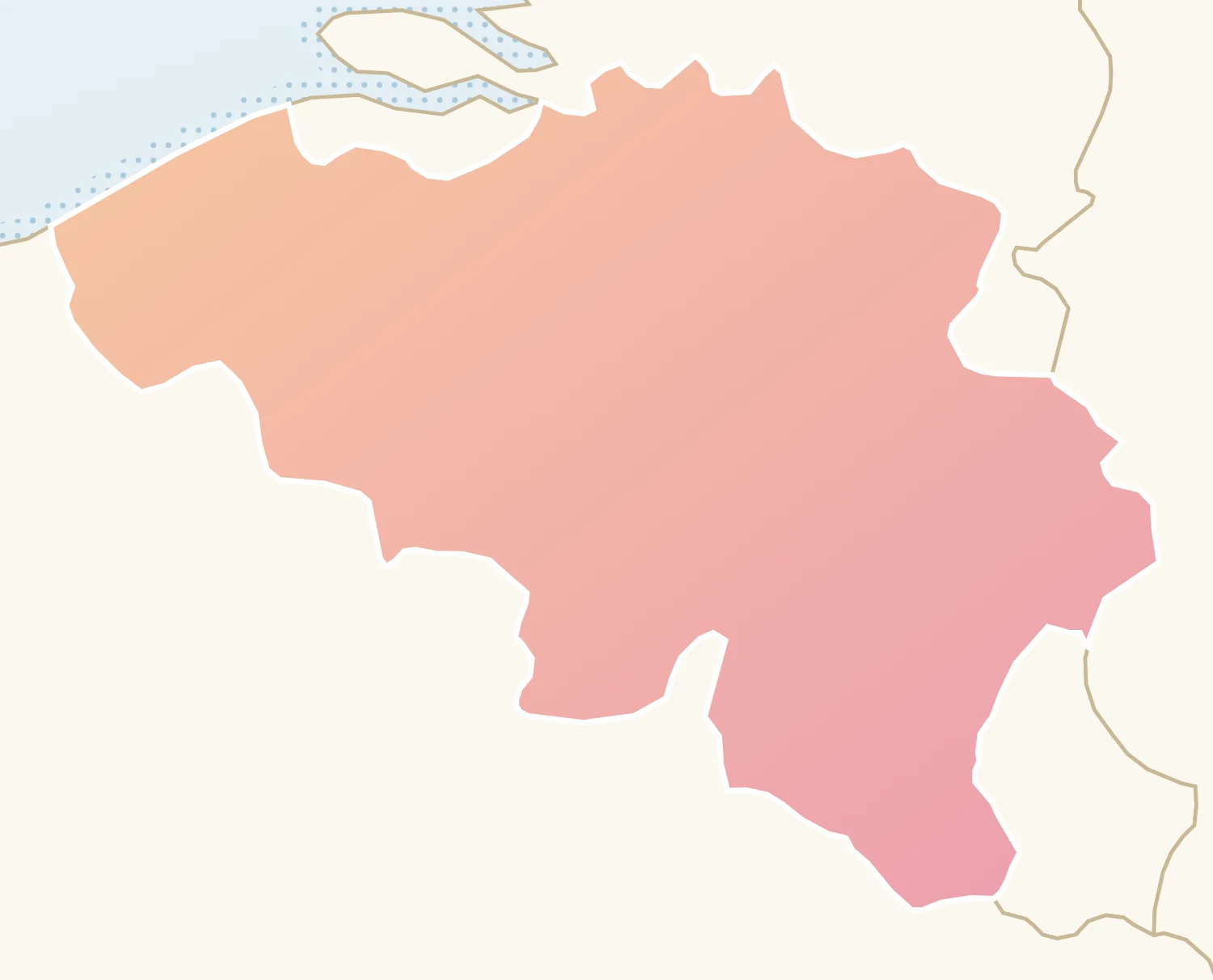
Belgium and the EU: a founder that became the host
Belgium and the EU have grown up together. Belgium signed the Treaty of Paris in 1951 and the Treaties of Rome in 1957, and when the new European Economic Community needed a home, Brussels offered offices while the founders failed to agree on a permanent seat. Temporary arrangements became permanent. Today the relationship between Belgium and the EU is unusual: a medium-sized country of about 11.8 million people hosts the Commission, the Council, the European Council and much of the Parliament's work.
The Brussels EU quarter
The Brussels EU quarter lies east of the old town, around Rue de la Loi, Rue Belliard and the Schuman roundabout. Glass and steel have replaced most of the nineteenth-century houses: the star-shaped Berlaymont, where the Commission works, the Europa building with its lantern-shaped meeting room for national leaders, and the long curve of the Parliament beside the Parc Léopold. The EU quarter also holds hundreds of lobby offices, permanent representations of the member states, think tanks and press bureaus.
For Belgium and the EU alike, the arrangement has been a mixed blessing. The Brussels EU quarter brings tens of thousands of jobs and a steady flow of diplomats, lobbyists and journalists, but also high rents and streets that empty in the evening. Cultural venues such as the Parlamentarium, the House of European History and the Goethe-Institut on Rue Belliard try to keep the EU quarter alive after working hours.
A small country hosting a very large neighbour
Belgian politics and the EU
Belgian politics and the EU are closely linked. Belgium is a federal state with three regions (Flanders, Wallonia and Brussels-Capital) and three language communities, and its governments are coalitions, often of six or seven parties split along language lines. Forming one can take more than a year: after the 2010 elections the country went 541 days without a full government. On European questions, though, the main parties have long agreed. Belgium tends to favour a stronger Union, and its politicians have filled top EU posts, from Prime Minister Herman Van Rompuy, the first permanent President of the European Council, to Charles Michel, who held the same post from 2019 to 2024.
Belgian politics and the EU also meet in everyday debates, such as the government's plan for an official alternative to the itsme login app, which echoed a wider European push for public digital identity.